Application Solutions

Match Wirtgen Milling and Reclaiming Trains to the Pavement Problem You Must Solve

Night highway overlays, municipal full-depth reclamation, airport panel mills and industrial hardstand stabilization each impose different milling depth, rotor torque and binder dosing constraints — we map machine classes to those constraints before you bid.

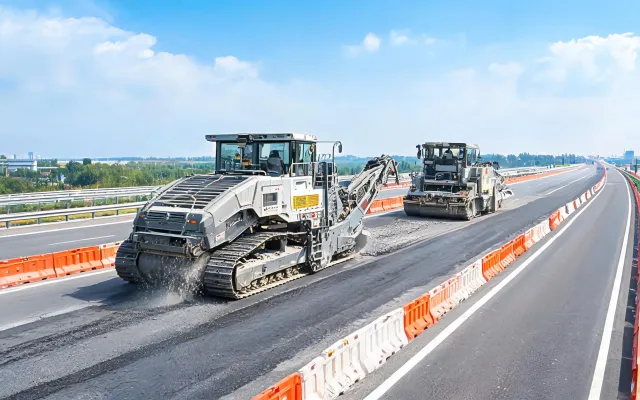
Milling train and reclaimer on highway corridor

Four Pavement Problems, Four Train Configurations

Each scenario lists the acceptance language paving engineers use, plus the Wirtgen machine mix that typically closes the window without idle trucks or rework milling passes.

Night Highway Overlay

When binder course thickness varies under aging overlays, half-lane cold milling machines with LEVEL PRO averaging keep depth inside millimetric bands so the paver sees a consistent gradeability profile. Front-loading conveyors protect truck cycle time while the compaction force window of the following roller train remains open.

  • W210Fi-class cold planer
  • LEVEL PRO multi-sensor pack
  • Conveyor swing for shoulder staging

Municipal Full-Depth Reclamation

WR-class reclaimers remix existing pavement and base with cement or foamed bitumen while traffic is staged one lane at a time. Rotor speed and binder dosing are logged so seven-day strength samples correlate with the mix design the geotechnical office signed before mobilization.

  • WR250i / WR240i-class reclaimer
  • Binder dosing accuracy audit
  • Ground pressure tuned for urban utilities

Airport Panel Mill-and-Replace

Full-lane mills hold cross-slope across wide runway panels where groove reinstatement and FOD control leave zero margin for depth drift. Operating weight distribution and hydraulic system pressure maps are documented for airside safety officers before the first cut.

  • Full-lane cold milling machine
  • Cross-slope and depth dual control
  • Airside FOD containment SOP

Industrial Hardstand Stabilization

Soil stabilizers lift bearing capacity under container yards and plant access roads by mixing lime or cement into weak subgrades. Vibration frequency of any following compactors is matched to moisture content so the treated base reaches target density without pumping fines.

  • Soil stabilizer with binder train
  • Moisture and dose sampling plan
  • Compaction force coordination

How Application Engineers Scope a Corridor Train

A four-step scoping loop that procurement managers and chief engineers can attach to RFQ packages — not a brochure checklist.

  1. 01

    Core samples & layer map

    Review binder and wearing course thicknesses, RAP content and any soft spots that change milling depth mid-lane.

  2. 02

    Machine class shortlist

    Match milling width, rotor torque and operating weight to traffic control geometry and truck staging constraints.

  3. 03

    Control & telemetry pack

    Specify LEVEL PRO sensor layout, IoT fuel maps and emissions documentation for Tier 4 Final / CE packages.

  4. 04

    PM & parts staging

    Lock 250/500/1000-hour cadence and regional hub pick kits against your corridor calendar.

Need a corridor train map before your bid closes?

Send lane width, milling depth targets and binder type — application engineers reply with a class recommendation and LEVEL PRO option list within one business day.

Request a Solution Brief